
Poster Information
Poster Set-up & Removal
Poster Set Up: Wednesday 18th February, 08:00-08:50
Poster Session: Wednesday 18th February, 17:40-19:10
Poster Prize Ceremony: Thursday 19th February, 17:25
Poster Take Down*: Thursday 19th February, 17:45-18:30
* Any posters remaining after the removal time will be taken down by the organisers, who accept no responsibility for loss or damage.
Poster Dimensions
Your poster must be one A0 sheet only, printed on one side.
To utilise the space most efficiently, please ensure that your A0 poster is created in Portrait format: 841mm x 1189mm. Please ensure that your poster does not exceed this size. We recommend that you leave a margin of at least 3 inches (7.5 cm) around the poster.
When preparing your poster, consider how much of your display will be visible at eye-level.
Please note: Posters that are in a landscape format, any other size, or is on more than one A0 sheet cannot be displayed on the boards.
Please print your own poster and bring it to the event.
Poster Panel Allocation
Each panel will be numbered and we will let you know your allocated panel at the conference registration desk. Once you are given your poster number, please find the corresponding panel to fix your poster to.
Posters will be affixed by adhesive Velcro tabs which we will provide.
Poster Session
There will be a designated poster session on Wednesday 18th February 2026 from 17:40- 19:10, during this time attendees will be browsing and the Programme Committee will be evaluating the posters, so please ensure that you stand by/near your poster(s) during this session. The poster session will also include drinks and nibbles.
We also recommend that you stand by/near your poster(s) during the morning/afternoon breaks and lunches, so you are available for discussion or questions from conference attendees.
Poster Prize
Members of our Programme Committee will be reviewing the posters and we will be awarding a prize for the highest rated poster. The Poster Prize will be given along with the Speaker Prize at 17:25 on Thursday 19th February 2026 at the end of the event.
Poster Location
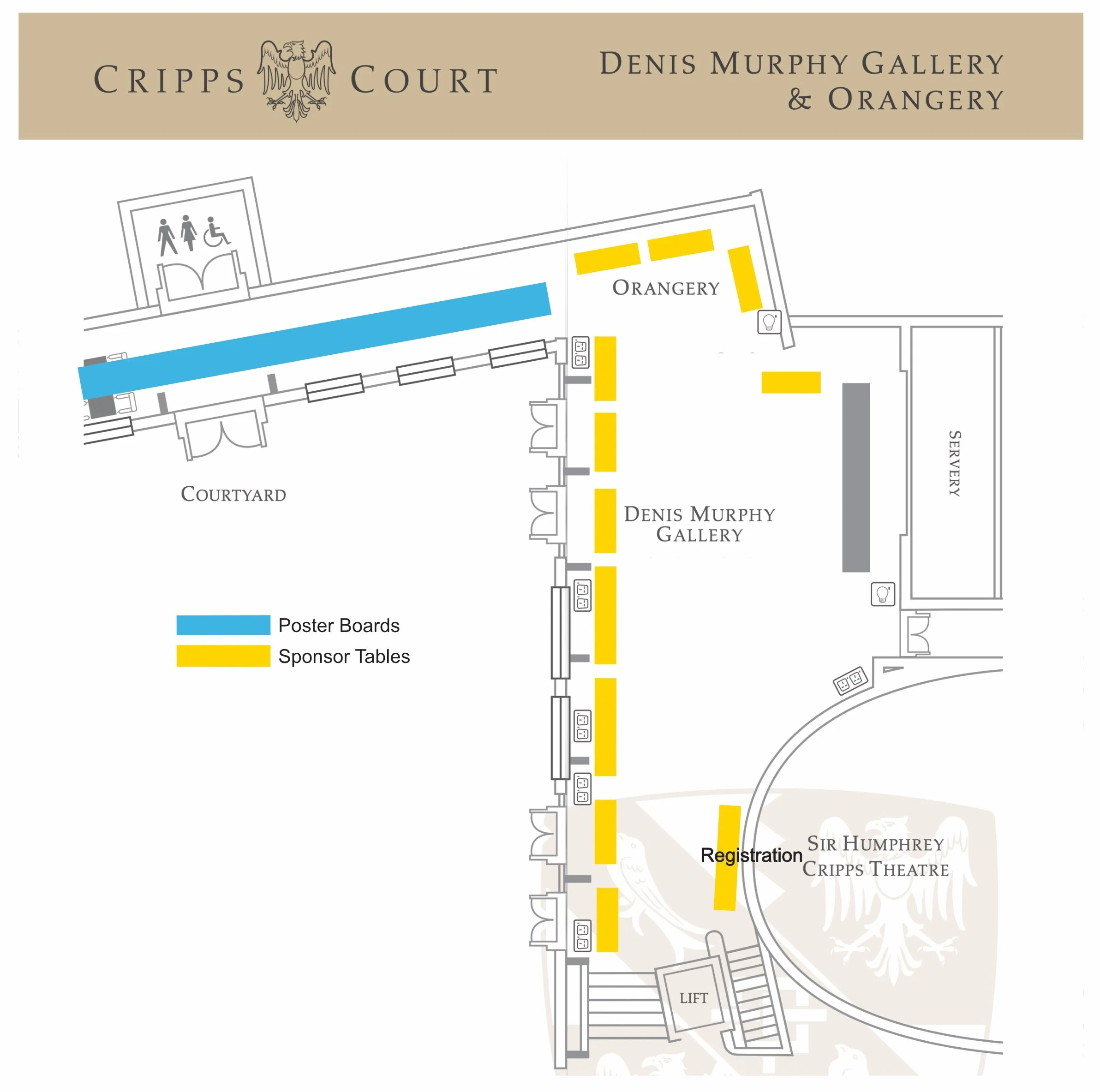
General Poster Guidelines
A poster should be self-contained and self-explanatory, allowing viewers to engage with it on their own with the author able to supplement or discuss particular points raised. Posters should be kept simple and clear, and a mixture of text and graphics is recommended. Remember that the viewer decides how long to spend viewing each poster.
Poster Layout/Format
Other presentation materials such as samples/demonstrators should be mounted on the poster with fixings capable of holding it firmly to your display. If possible, use matt finish rather than glossy paper to help reduce glare and improve readability. Arrange written material in columns rather than rows. It is easier for viewers to scan a poster by moving along it rather than by zigzagging back and forth in front of it. An introduction should be placed at the upper left and a conclusion at the lower right. The abstract does not need to be presented.
Illustrations
Figures should be designed to be viewed from a distance and should use clear, visible graphics and large type. Each figure or table should have a heading of one or two lines. Additional essential information should be provided below in a legend. Photographs should have good contrast, sharp focus and, if necessary, an indication of scale.
Text
Headings should be a minimum of 50 pt font in size, and 25 pt size font is suitable for text. Minimise narrative. Use large type in short, separated paragraphs. Numbered or bulleted lists are effective ways to convey a series of points. Do not set entire paragraphs in uppercase or boldface type.
Titles and Fonts
Titles and captions should be short and easy to read. Use large lettering as this means a number of people can read the poster from a distance without overcrowding. Remember to caption your poster with the title, authors’ names and affiliations.
Acknowledgements
We would recommend and encourage you to acknowledge any funding grants for the work presented that have been obtained from public funding agencies.
If you have any questions, please contact the conference organisers at: info@innolae.org