Short Courses at InnoLAE 2026
On Mon 16 – Tue 17 February, the days before the main conference, we are running a programme of technical short courses covering key topics. This is a great chance to take an in-depth look at a particular area of technology.
Discounted entries are available for students, if you register for the conference as well, and if you attend more than one course.
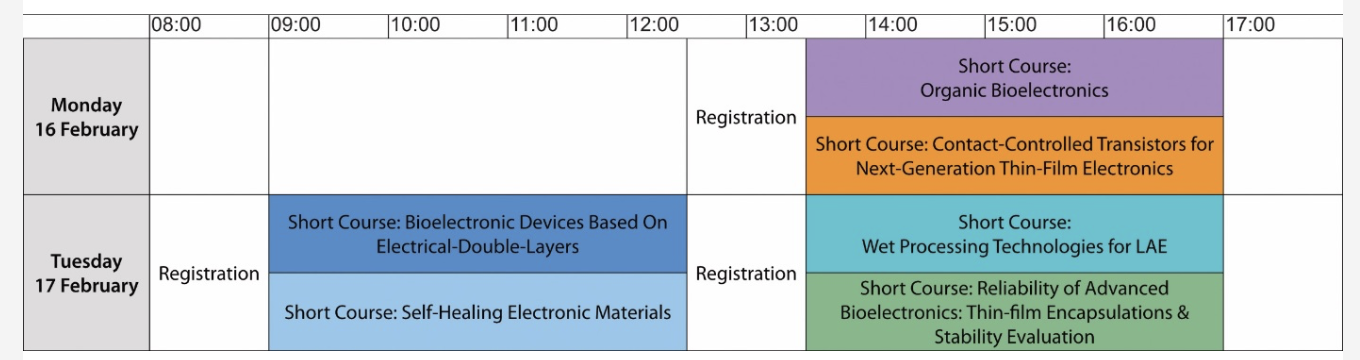
Monday 16 February 2026 (PM)
An introduction to what bioelectronics is and why it holds so much promise for meeting today's unmet medical needs, with a focus on organics, a class of materials extremely suitable for the fabrication of state-of-the-art bioelectronic devices. In this context, we will discuss why conducting polymers’ unique set of features allowed them to enter the world of bioelectronics, giving rise to the era of Organic Bioelectronics.
This course covers the yet-to-be-fully exploited contact-controlled thin-film transistors and their applications to emerging thin-film electronics. Participants will gain new or deeper insights into emerging device architectures and their applications, sparking future innovation and collaboration.
Tuesday 17 February 2026 (AM)
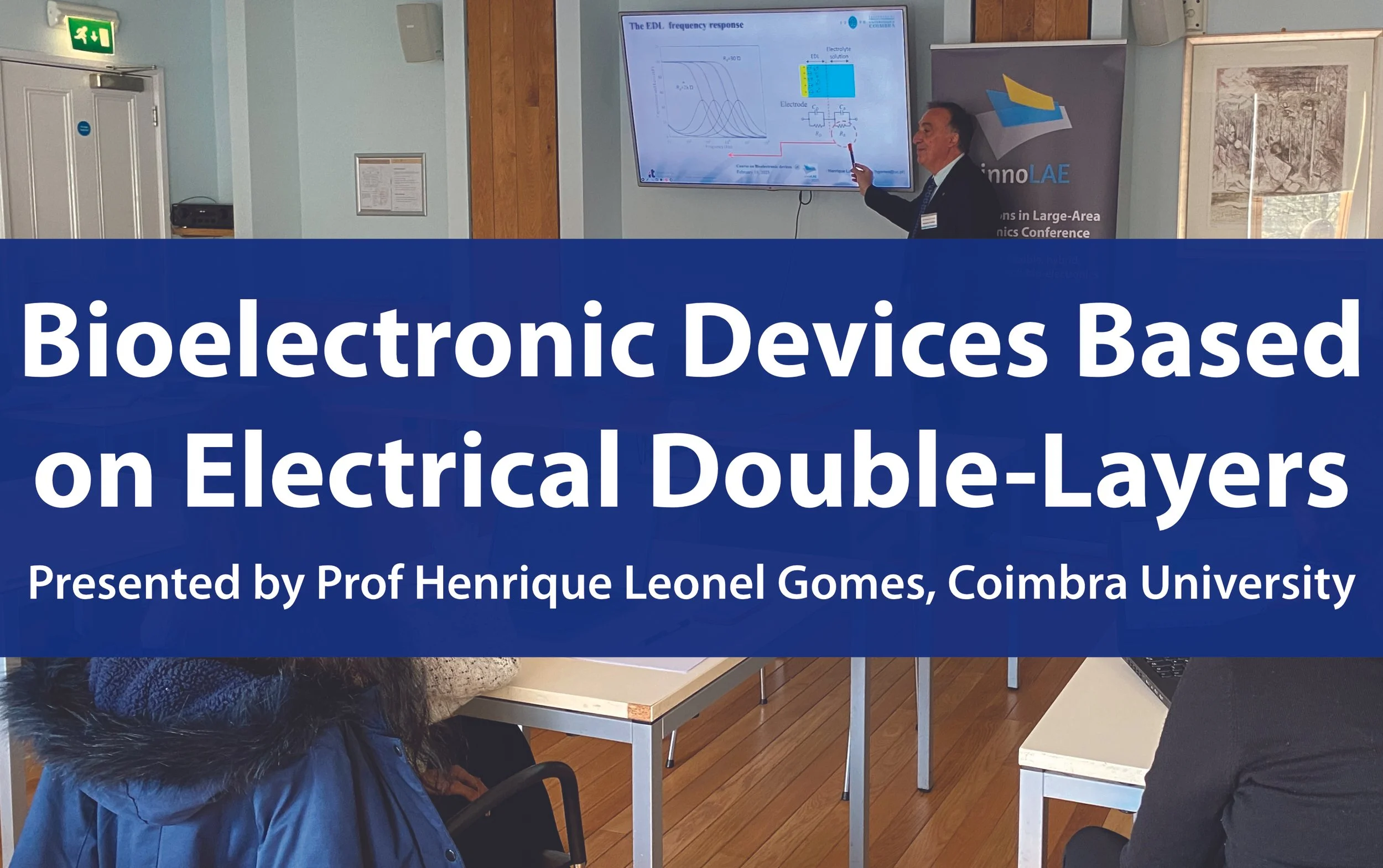
This course focuses on electrical methods to characterise devices that use electrical double-layers for bioelectronic sensing. These devices encompass a wide array of applications, such, as skin-adherent devices for monitoring physiological changes on the skin's surface or electrophysiological signals. A critical aspect of developing these types of bioelectrical devices lies in understanding the design principles that yield optimal sensing performance. This involves careful consideration of device geometry and a judicious selection of materials used in their fabrication, which will be covered in this course.
An introduction to the emerging field of self-healing electronic materials, which are driving innovation in next-generation devices. The session will review the design of self-healing electronic composites, which combine a polymer matrix providing the healing function with conductive fillers such as metal nanoparticles, nanocarbons, silver nanowires, liquid metals, or conducting polymers. The course will also address key challenges, including achieving the optimal balance between mechanical and electrical properties and improving our understanding of the chemical and physical mechanisms behind self-healing.
Tuesday 17 February 2026 (PM)
This course covers the inks and printer technology required for deposition techniques including screen, inkjet and flexo/gravure printing. The short course also covers coating techniques such as doctor blade and slot die, drawdown, spin and spray coating. In each case the advantages, disadvantages and technological challenges of each technique will be covered, along with issues arising in scale up for manufacture.
This course will discuss the reliability and stability of advanced bioelectronics, which represent a crucial need for any biomedical application and one of the most discussed hot topics in the scientific community.
Discounts are available if you attend the conference, as well as one or more courses.